
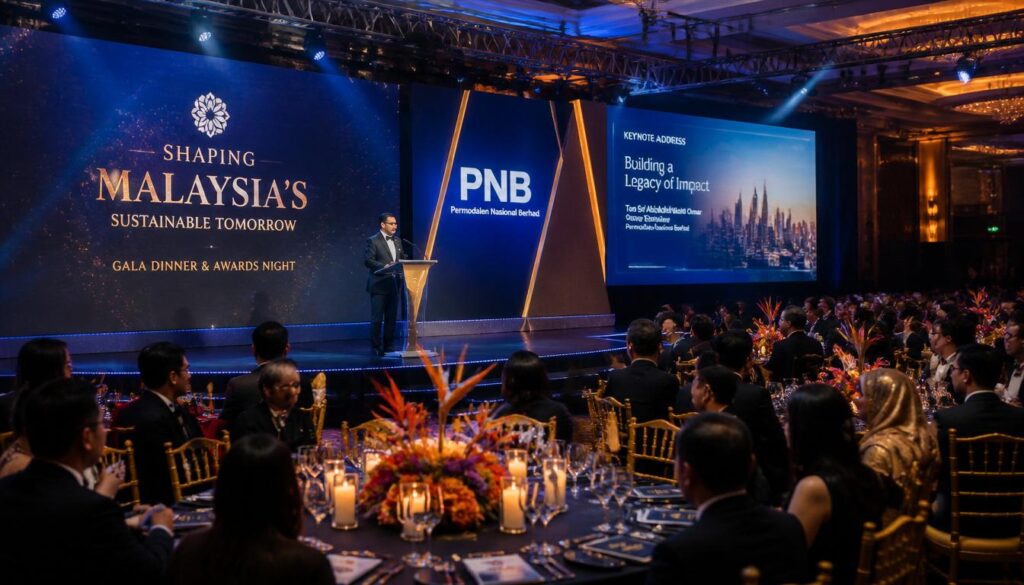
Executing a seamless corporate function requires a clear strategy, strict budget management, and absolute technical precision.
Are you planning a corporate gala at the Kuala Lumpur Convention Center (KLCC)? Or maybe you are launching a new tech product across Malaysia?
No matter the scale, pulling off a flawless experience requires deep expertise. As one of the most experienced local corporate planners, Genio has mastered the art of transforming chaotic ideas into structured, unforgettable realities.
The secret to a successful event lies in navigating the different stages of event planning with precision. At Genio, we have built our reputation as dependable professional execution teams in Kuala Lumpur by streamlining this complex process for brands across the capital.
Stop worrying now! Let’s break down the ultimate event planning checklist and explore the top tips for event management that set amateur events apart from true professional success.
Phase 1: Strategic Foundation & Purpose
Define SMART Goals
Every event must start with a crystal-clear destination. You cannot measure success if you do not know what you are chasing. That is why Genio always designs events around SMART goals: Specific, Measurable, Achievable, Relevant, and Time-bound targets.
Create an Event Purpose Statement
An Event Purpose Statement acts as your North Star. It is a simple, one-sentence declaration of the core value you promise to deliver. At Genio, we use this statement to guide every single decision, from the venue aesthetic to the choice of keynote speakers.
Align with Corporate Mission
You must remember that an event should never feel isolated from your broader brand identity. It needs to look, feel, and breathe your corporate mission.
If your company prides itself on cutting-edge innovation, a standard, predictable seminar format will fall flat-a rule that even applies to strict, specialized medical seminar guidelines. Genio specializes in weaving your corporate DNA directly into the event fabric, ensuring your brand story resonates clearly with every attendee in KL.
Conduct Pre-Event Surveys
Stop guessing what your target audience wants to see. Ask them directly. Sending quick questions to pre-event surveys yields invaluable data.
Genio leverages these insights early in the planning phase to customize content, which drastically boosts your final engagement rates.
Phase 2: Budgeting and Financial Risk Management
Categorize Costs
Financial surprises can ruin a great event. To keep your finances secure, you must build a comprehensive budget tracker. Genio recommends dividing your expenses into clear, distinct buckets.
| Expense Category | Included Items |
| Venue & Catering | Hall rental, food, beverage packages, DBKL permit fees, service taxes |
| Production & AV | Sound systems, LED screens, stage lighting, rigging, trussing |
| Talent & Entertainment | Emcees, live bands, performers, and artist management fees |
| Marketing & Print | Digital ads, physical backdrops, badges, lanyards, signage |
| Contingency | Emergency funds (Always allocate at least 10-15%) |
Negotiate Like a Pro
Never accept the first price a vendor quotes you. In Malaysia, event vendors often offer flexible pricing, especially during off-peak seasons.
Because Genio has spent years building deep networks across KL, we know exactly where to find cost efficiencies. Ask for package deals. Seek complimentary inclusions, such as basic AV setup.
Always clarify hidden service charges before signing. A line item skipped now is a costly dispute later.
Track Spending in Real Time
Do not wait until the post-event invoice reconciliation to find out you overspent. Update your expenses in real time as soon as a deposit is paid or a variable cost changes.
Genio uses centralized tracking systems to monitor every single Ringgit, keeping your corporate stakeholders completely stress-free throughout the project lifespan.
Define KPIs for ROI
How do you know if your investment actually paid off? You need to establish financial and operational Key Performance Indicators (KPIs) early on.
This might mean tracking your cost per attendee, measuring direct sponsorship revenue, or assessing post-event sales conversions. Genio structures these data points cleanly, giving you a transparent view of your exact return on investment.
Phase 3: The Technical Edge & Experience Design
Master “The Tech Behind the Event”
Modern events run on sophisticated technology. From high-speed dedicated event Wi-Fi to complex projection mapping, technical execution can make or break your attendee experience.
Genio treats the technical production blueprint with extreme care. We map out sound coverage, check sightlines for LED walls, and test frequencies to ensure no wireless mics drop out during critical corporate speeches. A single dead microphone can destroy months of brand building in three seconds.
Design for Inclusivity
Great experiences are designed for everyone. This means your event layout must account for diverse attendee needs.
Ensure the venue features wheelchair-accessible ramps, clear directional signage, dietary variations such as Halal or allergen-free selections, and structurally sound, eco-friendly gathering strategies.
Genio intentionally audits venues across Malaysia to guarantee that all guests feel completely safe, comfortable, and respected. Inclusivity isn’t a buzzword; it’s a fundamental operational requirement.
Leverage Hybrid Capabilities
Why limit your audience to just the people inside the physical ballroom? Implementing mixed-mode broadcasting solutions maximizes your brand reach across Malaysia and beyond.
Genio designs hybrid environments that engage both online and in-person audiences simultaneously, using live Q&A apps, interactive polls, and dedicated virtual networking lounges. Don’t treat your online viewers like passive spectators. Give them a front-row experience.
Incorporate “Small Surprises”
Predictable events are easily forgotten. To keep your audience talking long after the closing remarks, inject unexpected moments of delight.
This could be a sudden, high-energy live performance curated by our talent management team, a unique, localized door gift, or aligning with modern experiential marketing shifts like an interactive augmented reality photo booth.
Genio loves crafting these memorable moments to elevate the room’s overall energy.
Phase 4: Logistics, Teamwork, and “Anti-Chaos” Tactics
Avoid “Godzilla” Syndrome
Look, we’ve all seen this nightmare unfold on-site. One stressed-out planner tries to handle the emcee, coordinate catering arrivals, and fix a loose stage wire all at once.
They burn out by noon. Communication completely breaks down. We call this the “Godzilla” syndrome, and it will crush your event.
Don’t do it. Avoid this trap by delegating clear ownership. Genio assigns dedicated zone leaders, such as a stage manager, a registration lead, and a VIP liaison. This structured approach ensures a balanced, highly efficient execution.
The 2-Week Run-Through
Never leave your logistics to chance on show day. Exactly two weeks before the live date, Genio conducts a meticulous verbal and logistical run-through.
We review the entire sequence of events, minute by minute, with the client, vendors, and tech crew. This exercise uncovers hidden scheduling conflicts, tight transition windows, or audio-visual gaps long before they turn into real problems.
Centralize Your Tech Stack
Are your team communications scattered across WhatsApp threads, long email chains, and random Google Sheets?
That is a recipe for operational chaos. Genio centralizes all event data, from guest lists to technical cue sheets, into a single, accessible project management platform.
When everyone views the exact same data source, communication errors drop to zero.
Pack a “Crisis Kit”
On-site issues will happen. A presentation file gets corrupted, a VIP’s outfit tears, or a critical adapter goes missing. Genio always rolls into a venue with a fully stocked event emergency kit.
What is inside? Extension cords, HDMI adapters, gaffer tape, basic medical supplies, safety pins, extra batteries, and spare printed badges.
Being prepared keeps our production team calm under pressure. We carry the solutions so you never have to panic.
Phase 5: Post-Event Impact & Continuous Improvement
The 24-48 Hour Rule
The clock starts ticking the moment your guests leave the venue. To maximize your event’s impact, follow up within 24 to 48 hours.
Send out thank-you emails, distribute the main presentation slides, and include a link to your post-event feedback survey while the experience is still fresh in their minds.
Genio assists brands in automating this process to maintain high audience engagement.
Repurpose Your Content
Do not let months of planning vanish after a single day. Your event is a goldmine for content marketing.
Genio helps clients film high-quality video footage, record keynote sessions, and capture photography.
You can easily break this media down into short social media clips, insightful blog posts, or detailed case studies that drive organic traffic to your website for the rest of the year. Turn an 8-hour event into 6 months of digital content.
Structured Team Debrief
No matter how flawless an event seems to the audience, there is always room to grow. Schedule an internal debrief session with your core team and vendors within a week of wrap-up.
Genio uses these sessions to analyze what went well, what didn’t, and how operational workflows can be improved for the next project.
Report to Sponsors with Data
If you want corporate sponsors to fund your future initiatives, you must show them concrete proof of value. Avoid vague summaries.
Instead, present them with a clean post-event report filled with hard data: exact attendance figures, social media impressions, booth traffic metrics, and survey satisfaction scores.
Genio packages these insights beautifully to help you secure long-term sponsor loyalty. Turn qualitative happiness into quantitative data.
Conclusion
By implementing the best event planning tips and understanding how to plan a successful event, you can easily minimize risk and design highly engaging corporate experiences.
Look, you do not have to carry the logistical weight entirely on your own shoulders. When shortlisting corporate production partners, finding an experienced team makes all the difference. Let Genio handle the complex logistics, layout design, and vendor coordination for your next project.
Ready to elevate your brand experience in Kuala Lumpur? Contact Genio today, and let’s collaborate to turn your strategic event vision into reality.
Frequently Asked Questions
What are the 7 stages of event planning?
The seven stages consist of:
- Research and goal formulation
- Conceptualization and theme development
- Budgeting and financial mapping
- Venue selection and site sourcing
- Vendor coordination and talent booking
- On-site execution and event production
- Post-event evaluation and data reporting
How far in advance should I start planning a large corporate event?
For large-scale corporate events in KL involving over 300 guests, you should ideally start planning 6 to 9 months in advance. This timeline secures top-tier venues like KLCC or major hotels, ensures premium vendor availability, and allows ample time for marketing, registrations, and smooth coordination management.
What is the difference between event planning and event management?
Event planning focuses on the strategic foundation, design, and logistics, such as selecting themes, mapping budgets, and curating schedules. To better understand the core responsibilities of a production agency, remember that management involves the execution, technical production, and live operational control on the day of the event to ensure everything runs smoothly.
What are the 5 C’s of a successful event?
The 5 C’s stand for:
- Concept: The core idea and purpose.
- Coordination: The logistics, vendor scheduling, and timelines.
- Control: Budget management and risk mitigation.
- Culmination: The actual live event execution on-site.
- Closeout: Post-event evaluation, feedback, and final reporting.
How do you calculate event ROI for a non-profit?
For non-profits, Return on Investment (ROI) is calculated by subtracting total event expenses from total funds raised (donations, sponsorships, ticket sales), then dividing the net profit by total expenses. You should also measure non-monetary returns, such as new donor sign-ups and media impressions.
What are the most common mistakes to avoid in event production?
The biggest mistakes include underestimating setup and rigging times, ignoring local municipal permit requirements (like DBKL licenses), failing to run a full technical rehearsal, lacking an explicit backup power plan, and leaving gaps in on-site communication channels.
What essential skills does every event planner need?
A successful planner requires exceptional time management, strong negotiation skills, clear communication, rapid problem-solving under intense pressure, technical literacy, budget discipline, and a sharp eye for design detail.
How can technology improve the attendee check-in process?
Using QR code scanning systems, synchronized cloud guest lists, and on-demand badge printing stations eliminates long queues. This technology ensures an efficient check-in experience while providing your production team with real-time attendance data.