
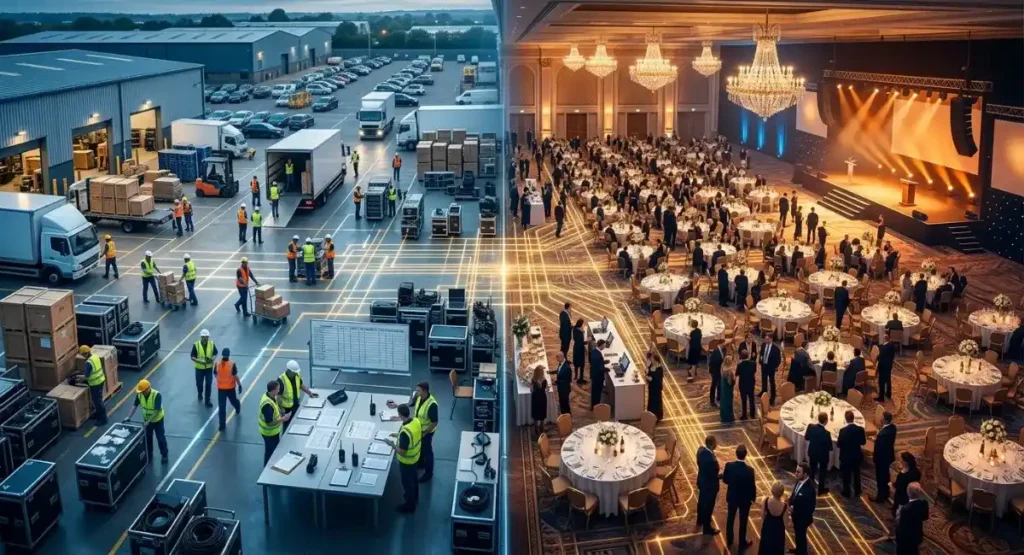
Every great event has a secret. It’s not the stage, the speakers, or even the catering. It’s the event logistics planning happening completely out of sight, and when it works, nobody notices. When it doesn’t? Everyone does.
At Genio, we’ve spent over years turning behind-the-scenes chaos into events that run like clockwork, establishing ourselves among the premier corporate event production teams operating in Malaysia across Kuala Lumpur and beyond. This guide gives you the full picture, no filler, combining standard industry blueprints with our top-tier actionable execution advice on what truly works.
What is Event Logistics Planning?
Event logistics planning is the strategic management of all the moving parts, resources, and timelines required to execute an event safely and seamlessly. It focuses entirely on operational execution rather than creative design.
The “Behind-the-Scenes” Engine
Event logistics planning is the art of coordinating every moving part of an event, before, during, and after. Think of it as the engine under the hood. Guests see a beautiful car. Genio makes sure the engine doesn’t stall.
It covers everything: where equipment gets delivered, who manages the loading bay, how 500 guests move from registration to the ballroom, and what happens if the AV system dies 10 minutes before the keynote.
Logistics vs. Production vs. Operations
People mix these up all the time. Here’s the simple breakdown:
| Term | What It Covers |
| Event Planning | The “what” concept – theme, agenda, and speakers |
| Event Production | The “how it looks” – stage, lighting, AV, décor |
| Event Logistics | The “how it all moves” – transport, timelines, staffing, supply chain |
| Event Operations | The “how it runs on the day” on-site coordination, and real-time decisions |
Logistics is the glue that holds all three together.
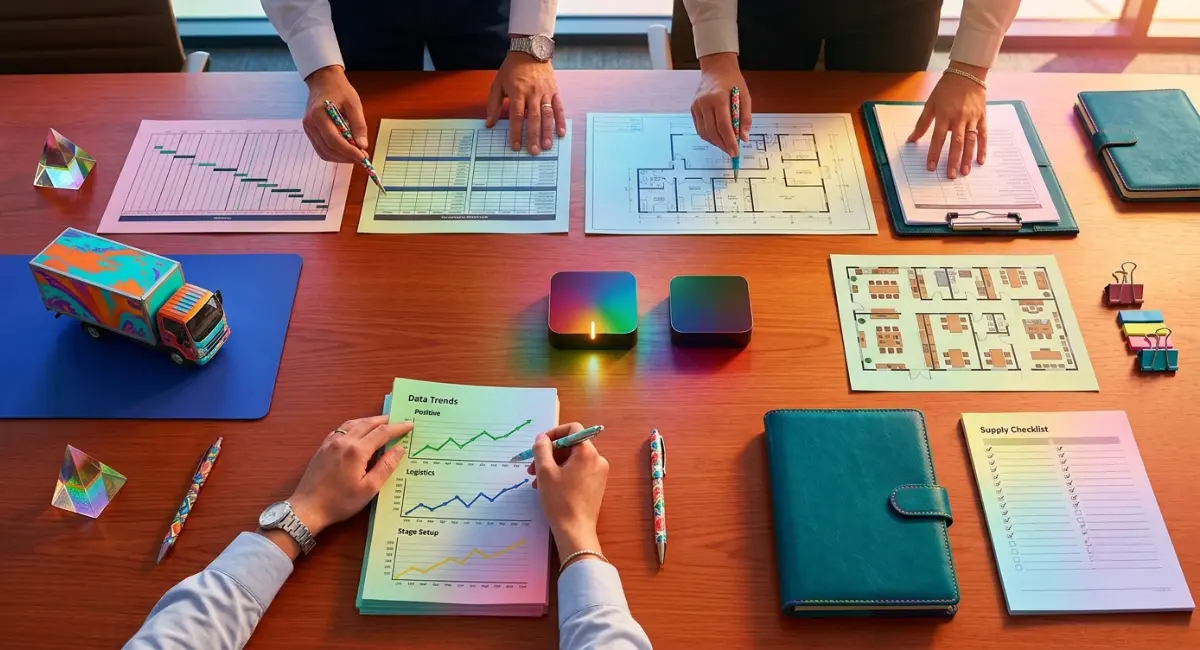
The Glue of Event Success
Without solid event logistics management, even the most expensive event falls apart. Genio’s approach treats logistics not as an afterthought, but as the foundation on which everything else is built.
The 5 Pillars of Event Logistics
From the physical limits of the loading dock to the real-time movement of thousands of attendees, every flawless execution relies on mastering these five core tactical areas.
Venue & Space Management
The choice of venue shapes every other logistics decision. Before signing anything, Genio’s team visits the site to map out load-in access, ceiling heights, power points, and attendee flow.
Transportation & Multi-Vendor Shipping
Coordinating deliveries from 10 different vendors to arrive in the right order, at the right time. As an experienced local setup coordinator in Kuala Lumpur, Genio builds master delivery schedules that account for KL’s traffic patterns and assigns dedicated logistics contacts for each vendor.
Technology & Infrastructure Setup
Power, internet, AV, lighting rigs, staging, all of this needs to be planned as event logistics infrastructure – especially when handling the digital bandwidth for blended in-person and virtual experiences – not just a simple production checklist. Genio pre-tests all tech setups at least 24 hours before event day.
Staffing & Workforce Coordination
On-site coordination only works when every team member knows exactly where to be, when to be there, and who to call when something goes wrong. Genio uses zone-based staffing models, each area of the venue has a dedicated lead who reports to a central command.
Resource & Supply Chain Optimization
From signage to furniture to catering equipment, every resource has a delivery window, a storage zone, and a return plan. Genio tracks all assets through a master resource log.
The Professional Planning Timeline: 12 Months to T-Minus Zero
A strategic, countdown-based execution roadmap designed to mitigate operational risk, build necessary layout buffers, and outmaneuver the end-of-year vendor crunch.
The Strategic Phase
This is where event logistics planning truly begins. Goals are set, the venue is locked, the master timeline development starts, and major vendors are shortlisted.
The Operational Design
Vendor contracts are signed. The logistics plan is built. Transport schedules, staffing structures, and the technology plan are all drafted.
The Execution Window
Permits are confirmed. Run-of-show documents are circulated. All vendors receive their delivery slots. Rehearsals are scheduled.
The “Live” Phase
Genio’s command structure goes active. Real-time communication runs through a single WhatsApp ops group and a physical command post at the venue.
Post-Event “Return Logistics”
Return logistics, equipment retrieval, waste management, vendor pack-down, and venue sign-off require their own checklists. Genio builds this into every event contract because a messy strike is as damaging as a messy setup.
Advanced International Logistics & Compliance
Navigating cross-border freight, strict import regulations, and local cultural dynamics to ensure foreign event equipment arrives on site without legal friction or penalties.
Avoiding the 110% Penalty
Importing exhibition freight into Malaysia without the required ATA Carnet documentation or customs clearance can result in penalties. Genio works with licensed freight forwarders and customs agents to ensure every international shipment is fully compliant.
EU vs. US Requirements
EU vendors often require specific CE certifications on technical equipment. US-based production companies ship in imperial measurements that don’t always translate cleanly to Malaysian venue specs. Genio bridges these gaps during the pre-event logistics.
Cultural & Local Nuances
In Malaysia, event logistics also means understanding the local context. Prayer time schedules affect break planning. Halal certification is non-negotiable for food supply chains. These are things only a local team like Genio truly accounts for.
From Chaos to Control: Real-World Experience & Crisis Management
How real-world tactical contingencies and boots-on-the-ground troubleshooting isolate single points of failure before they can derail your event itinerary.
The “Photos Lie” Rule
Genio’s team never finalizes venue logistics from photos or virtual tours alone. A ballroom that looks spacious in a brochure may have a 1.2-meter backstage corridor. Site visits are non-negotiable.
Building the “Logistics Buffer”
Every Genio event plan includes a logistics buffer: 20% extra time added to every setup phase, backup vendors on standby for critical services, and a float in the materials budget for last-minute replacements.
The Single Point of Failure
One of the biggest mistakes in event operations is having a single vendor responsible for something with no backup. Genio identifies every single point of failure in the logistics chain and builds redundancy around it.
Case Study
At a recent corporate gala for 800 guests in KLCC, a key furniture vendor confirmed a same-day cancellation at 6 AM. Genio’s logistics team activated a pre-approved backup vendor and had full replacement furniture on-site by 10 AM, three hours before doors opened. The client never knew it happened. That’s what properly done pre-event logistics planning looks like.
Avoiding the Fatal 5 Logistics Mistakes
A critical look at the five most common planning pitfalls that trigger structural delays, venue penalties, and breakdown in communication on site.
Underestimating Load-In Windows
Every venue has rules about when freight can arrive, which lifts to use, and how many vehicles can be on-site at once. Underestimating this time is the fastest way to create a cascade of delays.
The “Broken Telephone” Effect
When there’s no single source of truth, one shared document, one ops lead, information gets distorted. Genio uses a centralized run-of-show document that all vendors, staff, and venue contacts reference.
Ignoring Permit Requirements
In KL, certain events require DBKL permits, police presence for crowd management, or special approval for road closures. Missing these can shut an event down before it starts.
Neglecting Attendee Flow
How 800 people move from registration to their seats, then to catering, then to the exit, this is event logistics, not just crowd management. Poor flow creates frustration, long queues, and safety risks.
Procrastinating on Final Details
Final confirmations should happen 48–72 hours before the event, not the morning of. Genio runs a structured final check across every vendor, every team, and every zone, no exceptions.
The Future of Logistics: AI, Hybrid, and Sustainability
A look ahead to data-driven systems, analytics dashboards, and eco-friendly practices that are rewriting the operational rules of modern event coordination.
Sustainability-First Logistics
Genio integrates sustainability-first logistics into event operations: zero-single-use-plastic policies, centralized waste stations, and digital materials that replace printed collateral wherever possible to champion eco-friendly hosting practices.
The Role of Event Management Platforms
Centralized event management platforms now allow real-time tracking of tasks, vendor confirmations, and on-site coordination. Genio uses digital dashboards to give clients live visibility into event operations.
AI-Driven Analytics
AI-driven analytics are changing how post-event logistics are reviewed. From attendee flow data to vendor performance scores, future events are planned more smartly based on the data.
Frequently Asked Questions
What is the difference between event planning and event logistics?
Event planning covers the strategy and concept. Event logistics is how every physical detail, transport, equipment, staffing, and resource, gets executed on the ground.
What are the 5 key components of event logistics?
Venue management, transportation, technology and infrastructure, staffing coordination, and resource/supply chain optimization. All five are part of Genio’s standard logistics framework.
How do you manage international exhibition logistics?
Through licensed freight forwarders, customs documentation (like ATA Carnets), and pre-event compliance checks. Genio coordinates international freight from arrival at KLIA to final placement at the venue.
What is a logistics contingency plan for events?
It’s a pre-approved set of backup plans for critical failure points, backup vendors, alternative setups, and emergency budgets. Genio builds contingency planning into every project from day one.
Why is post-event logistics important?
Post-event logistics is important because a clean, organized pack-down protects your equipment, helps you meet venue deadlines, reduces the risk of extra charges, and leaves a professional impression.
Final
Event logistics planning is what separates a good event from one that people genuinely remember.
The venue, the speakers, and the theme matter. But none of it lands if the freight is late, the power trips, or the wrong team is managing the floor. That’s the reality Genio has navigated in Kuala Lumpur.
If you’re planning a corporate event, product launch, exhibition, or large-scale gala in Malaysia, talk to Genio. We’ll handle everything you don’t see, so your guests only experience everything they love.